



Laminar Airflow Cabinet for Sterile Laboratory Environments
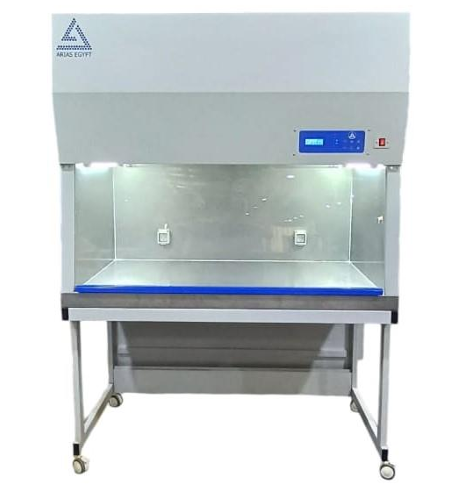
The Laminar Airflow Cabinet developed by ISG | Arias Egypt provides a sterile working environment designed for laboratories, research facilities, and pharmaceutical applications. Engineered with advanced HEPA filtration technology, controlled airflow, and UV sterilization, the cabinet creates a contamination-free workspace that ensures accurate experimental results and protects sensitive laboratory samples.
Introduction to Laminar Airflow Cabinets
A Laminar Airflow Cabinet is a specialized laboratory workstation designed to create a sterile environment by directing filtered air across the working surface in a uniform airflow pattern.
This airflow removes airborne contaminants such as dust, microorganisms, and microscopic particles that may affect laboratory experiments.
Laminar airflow systems are commonly used in microbiology laboratories, pharmaceutical laboratories, biotechnology facilities, and medical research centers.
Key Features
Removes particles as small as 0.3 microns with 99.995% efficiency.
Built-in UV lamp eliminates microorganisms and disinfects the workspace.
Smart interface for controlling airflow speed and cabinet functions.
Multiple blower speed levels for different laboratory applications.
Tracks total operating time for maintenance planning.
Allows safe connection of laboratory devices within the workspace.
How the Laminar Airflow Cabinet Works
The cabinet intakes air from the top of the unit where it is drawn into a blower system. The blower pushes the air through a high-efficiency HEPA filter which removes airborne particles.
After filtration, clean air flows vertically across the work surface in a uniform laminar airflow pattern, providing a stable sterile environment for laboratory procedures.
The airflow velocity is maintained between 0.3 and 1.2 meters per second, ensuring optimal performance and contamination control.
Technical Specifications
| Feature | Specification |
|---|---|
| Airflow Type | Vertical Laminar Flow |
| Filter Type | HEPA Filter |
| Filtration Efficiency | 99.995% for 0.3 µm particles |
| Air Velocity | 0.3 – 1.2 m/s |
| UV Sterilization | 200 – 300 nm wavelength |
| Control System | Digital Interface |
| Safety Feature | Automatic UV shut-off when door opens |
Applications
- Microbiology laboratories
- Pharmaceutical laboratories
- Biotechnology research
- Medical diagnostic laboratories
- Food testing laboratories
- Academic research institutions
Installation Guidelines
- Place the cabinet away from heavy laboratory traffic.
- Avoid installation near air conditioning vents.
- Leave at least 30 cm of space on both sides of the cabinet.
- Ensure no equipment blocks the air intake above the unit.
Frequently Asked Questions
What is a Laminar Airflow Cabinet used for?
It is used to create a sterile workspace for laboratory experiments by directing filtered air across the working area.
How does HEPA filtration work?
HEPA filters remove microscopic particles from the air before it reaches the workspace.
When should the UV lamp be used?
The UV lamp should be used when the cabinet is not in operation to disinfect the internal workspace.
This system is specifically designed for laboratories that require clean air conditions while handling non-hazardous materials, ensuring that experiments and samples remain protected from airborne contaminants.
Introduction to Laminar Airflow Cabinets
A Laminar Airflow Cabinet, often referred to as a Laminar Flow Hood, is a specialized laboratory unit that provides a sterile working environment by directing filtered air across the work surface in a uniform laminar flow pattern.
The primary function of this cabinet is to protect laboratory samples, materials, and experiments from contamination caused by airborne particles such as dust, microorganisms, and other environmental pollutants.
Laminar airflow systems are widely used in:
-
Microbiology laboratories
-
Pharmaceutical laboratories
-
Biotechnology research centers
-
Medical and diagnostic laboratories
-
Food and environmental testing laboratories
-
Academic research institutions
By continuously supplying ultra-clean air to the working area, these cabinets help laboratories maintain high standards of sterility, safety, and experimental accuracy.
How a Laminar Airflow Cabinet Works
The Laminar Airflow Cabinet operates using a carefully engineered airflow system designed to deliver clean, filtered air across the work surface in a consistent and controlled manner.
Air Intake System
Air is drawn into the cabinet from the upper section of the unit. This intake system ensures that the air entering the cabinet is properly directed toward the filtration stage.
Blower Motor System
A high-efficiency blower motor pushes the incoming air through the internal filtration components. The blower is designed to maintain stable airflow even when the HEPA filter becomes moderately loaded over time.
HEPA Filtration
The air then passes through a High Efficiency Particulate Air (HEPA) filter, which removes airborne contaminants and microscopic particles before the air reaches the workspace.
Laminar Airflow Distribution
After filtration, the purified air flows vertically across the work surface in a uniform laminar airflow pattern, bathing the workspace with clean air and preventing contamination from external sources.
This controlled airflow ensures that sensitive laboratory operations are carried out in a stable, sterile environment.
High-Efficiency HEPA Filtration Technology
The Laminar Airflow Cabinet is equipped with a high-performance HEPA filtration system, one of the most effective air purification technologies used in laboratory environments.
The installed HEPA filter removes particles as small as 0.3 microns with an efficiency of up to 99.995%, effectively eliminating airborne contaminants that could interfere with laboratory procedures.
This filtration system captures:
-
Dust particles
-
Bacteria
-
Fungal spores
-
Microorganisms
-
Other airborne contaminants
By continuously filtering the air supplied to the workspace, the system ensures that the working environment remains clean, stable, and contamination-free.
UV Sterilization System
In addition to HEPA filtration, the Laminar Airflow Cabinet includes an integrated UV sterilization system designed to disinfect the workspace when the cabinet is not in active use.
The UV lamp operates within a wavelength range of 200 to 300 nanometers, which is highly effective in eliminating microorganisms.
This sterilization process helps neutralize:
-
Viruses
-
Bacteria
-
Yeasts
-
Fungi
Exposure to UV radiation disrupts microbial DNA, rendering microorganisms inactive and preventing contamination within the workspace.
For user safety, the cabinet includes an automatic UV shut-off mechanism that turns off the lamp immediately if the cabinet door is opened.
Intelligent Digital Control System
The Laminar Airflow Cabinet features an advanced digital control interface that allows users to monitor and manage all system functions easily.
Adjustable Blower Speed
Users can select from multiple airflow speed levels depending on the specific laboratory task, ensuring optimal airflow performance.
Blower Lifetime Counter
The system records the total operating time of the blower motor in seconds, minutes, hours, and days, allowing laboratories to monitor system usage and schedule maintenance effectively.
UV Lamp Lifetime Counter
The cabinet also tracks the operational time of the UV lamp, helping users determine when the lamp should be replaced to maintain optimal sterilization performance.
Integrated Electrical Sockets
Built-in electrical sockets allow users to connect laboratory devices safely within the cabinet workspace, improving convenience and operational efficiency.
Safety Features
Laboratory safety is a critical factor in the design of the Laminar Airflow Cabinet. The system incorporates multiple safety mechanisms to protect both users and laboratory materials.
Key safety features include:
-
Automatic UV lamp shutdown when the cabinet door is opened
-
Controlled blower operation depending on door position
-
Protection against unsafe electrical usage
-
Stable airflow management to maintain contamination control
These features ensure that the cabinet operates according to best laboratory safety practices.
Technical Specifications
| Feature | Specification |
|---|---|
| Airflow Type | Vertical Laminar Flow |
| Filtration System | HEPA Filter |
| Filtration Efficiency | 99.995% for 0.3 µm particles |
| Air Velocity | 0.3 – 1.2 m/s |
| UV Sterilization | 200 – 300 nm wavelength |
| Control System | Digital Control Interface |
| Safety Feature | UV Auto Shut-Off |
| Power Sockets | Integrated Internal Sockets |
Applications of Laminar Airflow Cabinets
Laminar Airflow Cabinets are essential tools in laboratories that require contamination-free environments.
Typical applications include:
-
Microbiological analysis
-
Cell culture preparation
-
Pharmaceutical sample preparation
-
Sterile laboratory procedures
-
Research experiments
-
Quality control in industrial laboratories
These cabinets support laboratories in maintaining accurate, reliable, and contamination-free experimental conditions.
Installation and Placement Guidelines
To achieve optimal performance, the Laminar Airflow Cabinet should be installed according to recommended laboratory placement guidelines.
Best practices include:
-
Position the cabinet away from high-traffic laboratory areas
-
Avoid installation near air conditioning vents or strong airflow sources
-
Maintain at least 30 cm of free space on both sides of the cabinet for maintenance access
-
Ensure that the air intake above the unit is not obstructed by equipment or storage
Following these guidelines ensures stable airflow and long-term system reliability.
Why Choose ISG | Arias Egypt?
The Laminar Airflow Cabinet is proudly developed by Integrated Scientific Group and Arias Egypt, leaders in laboratory infrastructure and equipment solutions.
With years of experience in laboratory engineering and manufacturing, the company provides advanced laboratory systems designed to meet the needs of modern research facilities.
Key advantages include:
-
Advanced engineering and laboratory-grade materials
-
Reliable HEPA filtration technology
-
Integrated UV sterilization system
-
Intelligent digital control system
-
Durable and professional laboratory construction
These solutions help laboratories achieve high standards of performance, safety, and operational efficiency.
Frequently Asked Questions
What is a Laminar Airflow Cabinet used for?
A Laminar Airflow Cabinet is used to create a sterile working environment for laboratory procedures by directing filtered air across the work surface to protect samples from contamination.
How does HEPA filtration work?
HEPA filtration removes airborne particles and microorganisms from the air before it reaches the workspace, ensuring a clean environment for laboratory experiments.
What is the difference between a Laminar Airflow Cabinet and a Biosafety Cabinet?
Laminar Airflow Cabinets protect the product or sample, while Biosafety Cabinets protect the user, the product, and the environment when handling hazardous materials.
When should the UV lamp be used?
The UV lamp should be used when the cabinet is not in operation to disinfect the workspace and eliminate microorganisms before the next laboratory procedure.
Request More Information
For more information about the Laminar Airflow Cabinet, technical specifications, or pricing, please contact Integrated Scientific Group | Arias Egypt.
Our team will be happy to assist you in selecting the right laboratory solution for your facility.